
Research Presentation
I am a historian of ideas in post-war Taiwan, focusing on democratisation and social movement publications in the 1980s. I am currently completing a Ph.D at the École des Hautes Études en Sciences Sociales (EHESS, Paris) on student movements in 1980s Taiwan. Through examining the ways in which activists of the decade contested dominant visions of knowledge, politics and reformulated their political identities as both “students” and “intellectual youth,” I highlight an alternative heritage in Taiwan’s processes of democratisation—one largely overlooked in existing scholarship. More broadly, by exploring how social movements became a locus for alternative political knowledge, I seek to deepen understandings of the relationship between intellectual and political movements, between ideas and collective action.
My research identifies three main transformations in the knowledge politics articulated by student activists. Firstly, they advanced the framework of the “Third World” to situate Taiwan historically and internationally, countering the Kuomintang’s vision centered on ‘Free China’. This shift reframed Taiwan’s geopolitical position and redefined the most pressing political questions of the time. Secondly, alongside this new historical consciousness, activists introduced a repertoire of political participation. Moving away from the ideal of ‘social service’ towards ‘social inquiry’, they reimagined the function of knowledge in the political sphere while aligning closely with contemporary social mobilisations. Thirdly, activists engaged in a global critique of modernisation theory and developmentalist ideology—an intellectual movement that shaped the late Cold War. Crucially, they linked this critique to Taiwan’s democratisation, centered on renegotiating state–society relations and the contours of government power.
Together, these transformations left a significant, though underexplored, legacy in Taiwan’s democratic transition. By tracing these intellectual currents, my work seeks not only to enrich scholarly understanding of democratisation—already widely studied—but also to connect Taiwan’s experience to the global intellectual trends of the Cold War.
EATS Young Scholar Award Paper
The paper I presented at the 2025 EATS Conference, which received the Young Scholar Award, represents one dimension of my dissertation. It also reflects my attempt to propose a new framework of ‘intellectual history’ for studying Taiwan’s democratisation. The article examines the introduction and reconfiguration of the concept of civil society in Taiwan during the mid-1980s, a formative period in the country’s democratic transition. I argue that the Civil Society Debate (民間社會論戰) both reflected and shaped the role of intellectuals and activists in democratic struggles. By closely reading the writings of independent columnist Wang Hsing-ching and student activists associated with The South (南方) magazine, the study shows that ideas were not abstract imports but products of dialogue between theory and activist praxis.
The concept of civil society first entered the Taiwanese political sphere through Wang Hsing-ching, who wrote under the pen names Nanmin (南民) and Nanfangshuo (南方朔). Wang analysed the Kuomintang’s economic rule and envisioned civil society in primarily economic terms, as a counterweight to state domination. His popularisation of minjian shehui (民間社會) provided a vocabulary that student activists soon appropriated. For them, however, the stakes were not only economic but existential: how should intellectuals—a category with which they identified—intervene in democratisation and social movements? Their writings revealed an intense search for the intellectual’s role, drawing inspiration from Gramsci’s ‘organic intellectuals’ and, at times, Russian populist traditions.
Tensions arose when student activists mobilised the concept of civil society in nationalist debates, prompting sharp criticism from contemporaries. This controversy pushed them to refine their arguments, culminating in the most systematic theorisation by Cheng Lu-lin (鄭陸霖), who wrote under the pseudonym Muyu (木魚). In an essay published in The South, Cheng argued that democratisation required confronting three intertwined forms of domination: economic monopoly, capitalist logic, and Kuomintang control of the state. Drawing on Antonio Gramsci, Michel Foucault, John Urry, E. P. Thompson, and Ernesto Laclau, Cheng reconceptualised civil society as a complex field of practice where multiple struggles converged.
Within this framework, intellectuals were to act as ‘organic intellectuals’, rooted in domains such as labour, feminism, or environmentalism. Their role was to analyse concrete relations of subordination and emancipation, resist universalising claims, and help social movements articulate broader democratic visions. This shift moved student discourse from abstract calls to a concrete roadmap for reciprocal engagement between intellectuals and society.
Cheng’s vision gained traction among student circles, many of whom sought to implement it through active participation in social movements during the late 1980s. The Civil Society Debate thus became more than an intellectual exercise: it provided a framework for reimagining the role of knowledge, intellectuals, and political activism during Taiwan’s democratisation.
The study concludes that Taiwan’s debates over civil society reveal plural understandings of democracy, shaped by the interplay of ideas and historical context. It also points to promising research directions, showing how intellectual history can open new perspectives on Taiwan’s democratisation and revisit classic themes in existing scholarship. By pursuing this line of inquiry, I aim to contribute to a richer and more nuanced understanding of how democratisation was conceptualised and enacted in Taiwan.
I am deeply grateful to EATS for the opportunity to present my work at the 2025 conference and for the recognition granted by the Young Scholar Award. It was also a valuable occasion to meet and exchange with inspiring colleagues, whose work and perspectives have enriched my research. This encouragement strengthens my belief that intellectual history offers crucial insights for reinterpreting Taiwan’s democratic transformation.
Contributor Bio
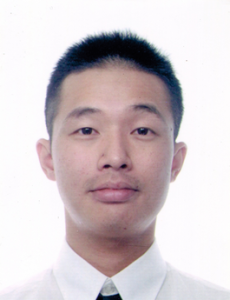
PENG Chao-Hsuan is a lecturer and contractual Ph.D. candidate at the School of Advanced Studies in the Social Sciences (EHESS) in Paris.
As a historian of ideas, he is particularly interested in the role of political thought, social movements, and dissident press in Taiwan’s democratisation. He is currently preparing a dissertation on the student movements in 1980s Taiwan.