
Research to date
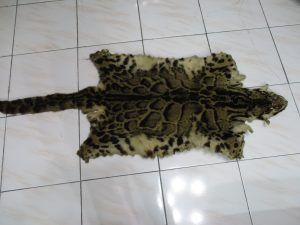
My research focuses on human–animal and environmental anthropology. I am particularly interested in the human–animal links forged in and through conservation or extinction situations. In the context of wildlife management, I have been able to observe the interactions and ontological frictions between scientists, government agents and Taiwanese indigenous peoples (particularly the Paiwan) as they relate to conservation issues. My research has enabled me to reflect critically on issues of environmental anthropology, but my training in applied anthropology and my doctorate in a field of indigenous studies have also enabled me to examine the interactions between indigenous populations, the globalised world and the capitalist consumer society. My thesis therefore analyses, through the animal prism, the links between social and environmental transformations in a postcolonial context.
My research has focused on two animals, the endangered mountain hawk-eagle (qadis; in the Paiwan language) and the clouded leopard (likulau), considered extinct in Taiwan. These two animals hold special positions in Paiwan society and have been used to produce special artefacts with their skins, the teeth of the feline, and the eagle’s feathers. Those artefacts are deeply anchored in the production and reproduction of society as emblems of social status. They also participate in maintaining bonds between humans, animals and spirits. The conservation of animals embedded into local cultures is often arduous because these management projects directly impact the beliefs of local people and their cultural interaction with animals. Issues surrounding wildlife management are particularly interesting in Taiwan, where claims for indigenous hunting rights are becoming more evident and pressing while the government’s environmental policies are also being reinforced.
These animals, in their links with Paiwan culture, offer two very different case studies which highlight various aspects of contemporary issues at Taiwanese and global levels; such as the questions of hunting rights and autonomy in the management of local indigenous resources, the commercialisation and material transformation of cultural objects, and the evolution of the relationship with the natural and spiritual worlds in relation to insertion into national and global society. Disappearance is at the core of my research while I analyse the process of transformation and continuity in a world threatened by cultural and environmental modification. Extinction as a process of fading away impacts our human and non-human animal material realities. My research constantly reflects on how ideas such as categorisation, naming systems, reality, and even presence are all subjectively constructed. To classify animals, to see them as endangered, extinct, taboos, or sacred, is always to use a specific form of representation. That is why I regularly go back in my work to the ideas of classification itself, to better unveil the multiplicity of our comprehensions of the world, which are constantly interfering with and encountering each other. My thesis’ viva examiners reflects the diverse orientations of my multi-disciplinary research with anthropologists, sociologists and geographers.
Following on from this PhD, my post-doctoral research will consider the impact of conservation projects on the human–animal relationship. By analysing the extinction of the clouded leopard in Taiwan, I will analyse the interface between global scientific policies and the local impact on wildlife management. Looking back in time, this research will trace the implementation of conservation programmes in the Paiwan territory alongside the social traumas that shape the clouded leopard’s current liminal presence. Using the concept of haunting and survival, this research will examine possible forms of maintenance in times of extinction. I will also locate my observations in a postcolonial context to better understand how some traumas and ghosts of the past keep inhabiting the present.
EATS YSA research project
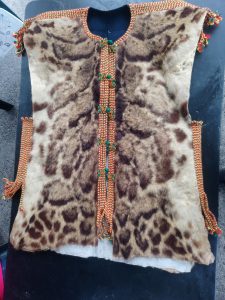
In the frame of EATS’ 2024 conference, and presenting for the Young Scholars Award, I decided to present part of my PhD research by focusing on the clouded leopard (likulau), declared extinct in Taiwan, and the special bonds it holds with the Austronesian Paiwan. My paper was entitled “Deconstructing extinction: Beyond conservation narratives, looking at the likulau presence in the Paiwan world.” In the time of the Anthropocene where the anxiety for species extinction has reached a peak, my research proposed to reconsider a concept of “extinction” that might not mean an ending but rather another form of presence. During my research, I kept looking at invisible traces: the traces of an extinct animal and the fragments of silences it left behind it. The difficulty of speaking about feelings or beliefs which are often hidden made it more arduous to perceive what significance the leopard still holds today for the Paiwan. Talking about extinction is a complex matter. The definition of this concept is not clear, since the realities it covers are not the same for each person. In this research, deconstructing the notion of extinction as a well-defined category, I observed how continuities are possible in times of disappearance.
During my presentation, I analysed the definition of “extinction” as it is commonly accepted and the manner in which extinction studies deal with the concept to trace the liminal presence of the extinct likulau in the Paiwan mountains. Relying on five years of PhD research, I proposed a new approach to species extinction, by retracing the human–animal entanglement which allows us to build and rebuild bonds despite socio-environmental transformations. So, what this research looked to show is the possibility of resilience of a species beyond physical disappearance, and, at the same time, the difficulty of using scientific categories as restrictive definitions of reality when fieldwork reveals the complexity of ontological views concerning human–animal relationships.
I was very grateful to EATS for giving me the opportunity to present my research at the 2024 annual conference. Since my PhD took place in Taiwan, it was important for me to present my research and part of my findings in Europe. Through this conference I had the chance to meet many researchers working in Taiwanese studies, and I collected many observations and suggestions concerning my research which have been very helpful. I really want to thank EATS for giving me the first prize of the Young Scholar Award and for all the comments the committee made on my paper.
Contributor Bio

Agathe Lemaitre is a doctor in anthropology, who graduated in July 2023 from the College of Indigenous Studies, Department of Ethnic Relations and Cultures, National Dong Hwa University, Taiwan. Her PhD research considers the relationship between the Austronesian Paiwan and two species of nonhuman animal, the locally extinct clouded leopard (Neofelis nebulosa) and the endangered mountain hawk-eagle (Nisaetus nipalensis), from a social, political and environmental perspective.
She is interested in human–animal relationships in conservation or extinction situations, and she notably analyses the concepts of haunting, disappearance and survival to understand the possibilities for resilience in times of disruption. Since July 2024 she is a post-doctoral researcher funded by the Chiang Ching Kuo Foundation of Taiwan and affiliated with the research Lab UMR LISE (CNRS/CNAM) in Paris.
ORCID: 0000-0002-3284-8802