

In Robert D. Putnam’s classic book, Bowling Alone, he introduced the idea that social capital – “the connections among individuals and the norms of reciprocity and trustworthiness that arise from them” – was on decline around the world. The concept struck a chord with academics and the public, and a widespread examination of how social capital was diminishing was undertaken. Such a difficulty was bad enough on its surface – people were not even meeting together with friends for conversation and dinner as much – but yet worse was a lack of connection seen in schools, workplaces, families, communities, various social groups, organisations and networks, and governments. All of this interaction underpins the roles and rules that provide the opportunity and context for social interaction and support.
As noted, this lack of interaction has been seen worldwide, with those countries with the lowest social capital mostly found in Africa (due to reduced availability of health care services, child mortality, inadequate freedom of expression and unsound human rights records). In one SolAbility study, China was ranked 47th out of 176 entries, the US was 89th (the highest rankings are found in Western European countries and the Baltics). In a related study, the UN’s World Happiness Report 2024, Taiwan ranked 31st in the world, the highest in East Asia. Most observers would agree that Taiwan is relatively strong in these areas. Recently in China, an elderly citizen remarked, “I used to feel that my cultural life … was very impoverished, that there wasn’t much meaning in going on living,” reflecting the possibility that aged citizens suffer from this lack of interaction the most (Taipei Times, 13 July 2024).
Is such a failing taking place in Taiwan? It might just be, my students have told me, although in many ways Taiwan may be a bright spot in this conversation. In a word, this problem is not clear cut in Taiwan. Let’s examine what students have told me.
Some students spotted some negatives in terms of social capital in Taiwan. “I asked some friends and family about their experiences,” said one, and “many said they feel less connected to their neighbours now than in the past.” Another observed that people were going out to social clubs and events less now (the internet is behind this change, some said, and indeed one student remarked, “Technology and social media have changed the way people interact, especially among the younger generation … reducing the quality of face-to-face interactions”). “Taiwan faces many challenges that could reduce social capital,” said one student, with negatives including burgeoning technology and social media, and busy lifestyles. The gap between rich and poor is growing observed one student, which can “create tension and reduce trust in society.” We can see that there is something of a lack being seen here in Taiwan.
Further, one student observed, “When I was a kid, the relationship between people was closer that in is now.” This student blamed the internet for this, but on a more positive note, another observed that “these technologies are reshaping the way people interact,” a factor that Putnam also examines, and which indicates a possible positive outcome. One student similarly noted that “some traditional forms of social engagement may be declining due to urbanisation and technology (this was echoed by many students),” which is certainly a reality in Taiwan, but he went on that “Taiwan continues to demonstrate strong civic participation and community engagement.” This brings us to the positive, and in a word, there is very much a positive side to these changes and developments.
Students observed how, in Taiwan, a sense of community and face-to-face interaction was strong in many areas, particularly noting temple life in Taiwan, traditional markets and festivals, and various community movements, such as the well-known Sunflower Movement in 2014, which to be sure brought students and citizens together in a rich brew of interaction and demonstration. These movements and interaction help maintain social bonds and trust among people, students observed.
Another student noted how Taiwan’s vibrant democracy was an indicator of strong social capital. This reminds this writer of the social movements in the late 1970s and into the 1980s that brought together the first democratic activists in a flowering in Taiwan, leading to the transition to full democracy. “Taiwan’s vibrant civil society and social movements demonstrate strong bridging social capital,” noted one student, borrowing Putnam’s “bridging” idea. These are definite plusses. Another student took a positive look, noting that Taiwan’s “cultural values, technological use and political engagement have contributed to maintain and even strengthen social capital,” again a take on how improved technology can contribute in a positive way to these ideas.
“Taiwan still has strong social capital in any areas,” said one student, a firm positive statement, and he then added that, “to maintain and improve social capital, it is important for people to find a balance between modern life and traditional community values.” It may just be that Taiwan is accomplishing this, achieving a balance across convention and modernity, creating strong community ties by way of civil society and voluntarism, educational institutions, and government policies that strengthen social capital.
And so, although there are a few drawbacks, it appears that on the whole Taiwan has resisted this downfall of that which binds us, and has created reciprocity, community cohesion and civic engagement. Let’s hope that we are indeed not following in Putnam’s footsteps, that we are not “bowling alone,” and that the networks of relationships and mutuality among people who live and work together in Taiwan will empower a society that functions ever more successfully.
Contributor Bio
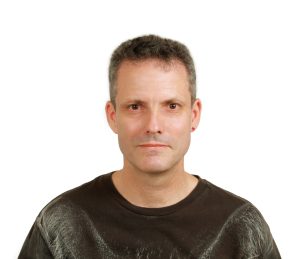
David Pendery was born in Cincinnati, Ohio and grew up in Albuquerque, New Mexico. He lived in San Francisco, and obtained his BA in International Relations at San Francisco State University. He lived in Boston and obtained his MS in Journalism at Boston University.
He has worked as a technician and writer in the US before relocating to Taipei, Taiwan in 2000. Here he has worked as an editor, teacher and journalist. He is currently an Associate Professor at the National Taipei University of Business.